- Details
- Written by: Febriyani Permata Sari
عَنْ أَبِي هُرَيْرَةَ رَضِيَ اللهُ عَنْهُ أَنَّ رَسُولَ اللَّهِ صلى الله عليه و سلم قَالَ: "مَنْ كَانَ يُؤْمِنُ بِاَللَّهِ وَالْيَوْمِ الْآخِرِ فَلْيَقُلْ خَيْرًا أَوْ لِيَصْمُتْ، وَمَنْ كَانَ يُؤْمِنُ بِاَللَّهِ وَالْيَوْمِ الْآخِرِ فَلْيُكْرِمْ جَارَهُ، وَمَنْ كَانَ يُؤْمِنُ بِاَللَّهِ وَالْيَوْمِ الْآخِرِ فَلْيُكْرِمْ ضَيْفَهُ".
[رَوَاهُ الْبُخَارِيُّ] ، [وَمُسْلِمٌ]
On the authority of Abu Hurayrah (may Allah be pleased with him), that the Messenger of Allah (peace and blessings of Allah be upon him) said: Let him who believes in Allah and the Last Day speak good, or keep silent; and let him who believes in Allah and the Last Day be generous to his neighbour; and let him who believes in Allah and the Last Day be generous to his guest.
[Al-Bukhari] [Muslim]
Summary of Discussion:
This hadith is about:
1. Speak Good or Remail Silent;
This point has been stated many times and explains in another hadith that we should only speak good to others.
From Abu Hurairah, he said, “A person asked the Messenger of Allah (peace be upon him):
ياَ رَسُوْلَ اللهِ ! إِنَّ فُلاَنَةَ تَقُوْمُ اللَّيْلَ وَتَصُوْمُ النَّهَارَ، وَتَفْعَلُ، وَتَصَدَّقُ، وَتُؤْذِيْ جِيْرَانَهَا بِلِسَانِهَا؟
‘O Messenger of Allah! There is a woman who prays at night and fasts during the day, performs good deeds, and gives charity, but she harms her neighbors with her tongue.’
The Messenger of Allah (peace be upon him) replied:
لاَ خَيْرَ فِيْهَا، هِيَ مِنْ أَهْلِ النَّارِ
‘There is no good in her; she is among the inhabitants of Hell.’
The companions then said,
وَفُلاَنَةُ تُصَلِّي الْمَكْتُوْبَةَ، وَتُصْدِقُ بِأَثْوَارٍ ، وَلاَ تُؤْذِي أَحَداً؟
And there is another woman who performs the obligatory prayers and gives charity with barley, but she does not harm anyone.’
He said, هِيَ مِنْ أَهْلِ الْجَنَّةِ
"She is among the inhabitants of Paradise."
(HR. Bukhari in Al-Adab Al-Mufrad, no. 119. Sheikh Al-Albani stated that this hadith is authentic. See Ash-Shahihah, 190)
2. Generous to neighbours;
Here are some good way to treat our neighbours:
- Starting to greet neighbors.
- Visiting neighbors who are ill.
- Expressing condolences when neighbors face misfortune.
- Congratulating neighbors when they experience joy.
- Sharing in their happiness and blessings.
- Apologizing if one has made a mistake.
- Making an effort to lower one’s gaze and not look at neighbors’ non-mahram wives.
- Taking care of neighbors' homes when they are away.
- Being kind and gentle to neighbors' children.
- Attempting to teach neighbors about matters of religion or worldly knowledge they may not be aware of.**
another thing that we should do to our neighbours is to remind them if they do something wrong. For example if we feel that our neighbours' plants are disturbing the roads and make other people angry about it, as a good neighbour we should remind them in a good way. Come to their house and visit them by bringing snacks before telling them the truth (with good words).
3. Generous to guests.
When a guest arrives at your home, whether he or she is expected or not, provide your guest with a pleasurable experience and to reap the rewards attained by pleasing God. Greet the guests warmly, welcome them to your home and show them into a comfortable and appropriate room. Hasten to provide them with food and drink so that they do not have to ask for these things. Prophet Muhammad showed respect to his guests by offering them the choicest food and delivering it in a timely manner.
It is the host’s duty to make the guest feel comfortable. One way of doing this is by identifying his or her possible needs in advance. It is better to offer a guest something before he or she has the chance to ask for it because a courteous guest may hesitate to mention any need. Out of his or her thoughtfulness, such a guest would even try to prevent the host from offering anything. The Quran offers the example of Prophet Abraham anticipating the guest’s needs and hastening to fulfill them.
Has the story reached you of the honored guests of Abraham? Behold, they entered his presence and said: "Peace!" He said: "Peace!" (and thought: "They seem) unusual people." Then he turned quickly to his household, brought out a roasted fattened calf, and placed it before them. He said: "Will you not eat?" (Quran 51: 24-27)
On the other hand, there are also responsibilities if we are the guests. One of them is to announce our visit in advance whenever possible. Another is to hasten to taste the refreshments and to pray for and ask blessings upon the host. After seeing to the initial needs of his guest the Muslim should take interest in his or her conversation. However, if the guest should speak about or engage in unlawful activity, the Muslim has every right to ask him to refrain from doing so.
Prophet Muhammad also said, "...And it is not lawful for a guest to stay with his host for such a long period as to put him in a critical position." Again, the responsibility of the guest is to bear in mind the conditions of his host and not burden him with what he cannot afford. Everybody has various duties and obligations that must be attended to, many of which may not be obvious or visible to the guest. By prolonging one’s stay one might inadvertently put his or her host under unbearable pressure.
Vocabularies:
1. Authority - Otoritas
2. Blessings - Berkah
3. Generous - Dermawan
4. Obligatory - Wajib
5.*Inhabitants - Penduduk
6. Misfortune- Musibah
7. Companions - Sahabat
8. Thoughtfulness - Perhatian
9. Lawful - Halal
10. Engage - Terlibat
11. Burden - Beban
12. Prolonging - Memperpanjang
Grammar:
How to translate a hadith?
When translating a hadith, it’s important to maintain clarity, accuracy, and respect for the original text. Here are some guidelines for ensuring proper grammar in your translation:
1. Understand the Context
- Ensure you fully understand the meaning and context of the hadith before translating. This helps you convey the intended message accurately.
2. Maintain the Structure
- Direct Quotes: Use quotation marks for direct quotes from the hadith. For example: The Prophet (peace be upon him) said, “...”
- Consistent Tense: Stick to the same tense throughout the translation. Generally, present tense works well for hadiths.
3. Use Clear and Concise Language
- Avoid overly complex sentences. Aim for clarity. For example, instead of saying, “Let him who believes speak good or remain silent,” you could say, “Those who believe should speak well or remain silent.”
4. Use Appropriate Punctuation
- Use commas, periods, and colons correctly to enhance readability. For instance, separate clauses clearly.
5. Include Parenthetical Explanations if Necessary
- If a term or phrase might not be understood by readers unfamiliar with Islamic terminology, provide brief explanations in parentheses. For example: “...and the Last Day (Day of Judgment)...”
6. Be Culturally Sensitive
- Ensure your translation respects the cultural and religious significance of the text. Avoid informal language or slang.
7. Revise for Grammar and Style
- After completing your translation, review it for grammatical errors, sentence structure, and overall flow. Ensure it reads smoothly.
- Details
- Written by: Febriyani Permata Sari
عَنْ ابْنِ مَسْعُودٍ رَضِيَ اللهُ عَنْهُ قَالَ: قَالَ رَسُولُ اللَّهِ صلى الله عليه و سلم "لَا يَحِلُّ دَمُ امْرِئٍ مُسْلِمٍ [ يشهد أن لا إله إلا الله، وأني رسول الله] إلَّا بِإِحْدَى ثَلَاثٍ: الثَّيِّبُ الزَّانِي، وَالنَّفْسُ بِالنَّفْسِ، وَالتَّارِكُ لِدِينِهِ الْمُفَارِقُ لِلْجَمَاعَةِ".
[رَوَاهُ الْبُخَارِيُّ] ، [وَمُسْلِمٌ]
On the authority of Ibn Masood (may Allah be pleased with him) who said: The Messenger of Allah (peace and blessings of Allah be upon him) said, “It is not permissible to spill the blood of a Muslim except in three [instances]: the married person who commits adultery, a life for a life, and the one who forsakes his religion and separates from the community.”
[Al-Bukhari] [Muslim]
Write comment (0 Comments)
- Details
- Written by: Febriyani Permata Sari
عَنْ أَبِي حَمْزَةَ أَنَسِ بْنِ مَالِكٍ رَضِيَ اللهُ عَنْهُ خَادِمِ رَسُولِ اللَّهِ صلى الله عليه و سلم عَنْ النَّبِيِّ صلى الله عليه و سلم قَالَ:
"لَا يُؤْمِنُ أَحَدُكُمْ حَتَّى يُحِبَّ لِأَخِيهِ مَا يُحِبُّ لِنَفْسِهِ".
رَوَاهُ الْبُخَارِيُّ [رقم: 13]، وَمُسْلِمٌ [رقم: 45].
[رَوَاهُ الْبُخَارِيُّ] ، [وَمُسْلِمٌ]
On the authority of Abu Hamzah Anas bin Malik (may Allah be pleased with him) — the servant of the Messenger of Allah (peace and blessings of Allah be upon him) — that the Prophet (peace and blessings of Allah be upon him) said:
None of you [truly] believes until he loves for his brother that which he loves for himself. [Al-Bukhari] [Muslim]
Summary of DIscussion
This hadith is especially mentioned about "love" which is familiar to everyone, here are some aspects of love in Islam:
-
Family relationshipsIslam places great importance on family bonds and the expression of love within the family unit. The Prophet Muhammad emphasized the importance of treating family members with kindness and affection.
-
Muslim relationshipLove in Islamic thought is not just a feeling of affection or physical attraction, but also devotion, loyalty, and a desire to draw closer to God.
-
Human relationshipCertainly Islam recommends Muslims to love people and optimise compassionate and sincere relationship with them, even if they do not believe in Islam or in God.
There are 3 main topics we discussed from this Hadith such as:
1. Who should we love the most in Islam?
After that, our parents, spouses, relatives, friends, all the human being and even the things we like should receive the love we have because love is not divided like a "Pizza." Every aspects can be considered as something we love because it is unlimited, we can love as many things as possible without reducing the portion of others.
2. Law - Morality - Love
Law refers to a set of formal rules and regulations enforced by a governing authority, while morality deals with principles and values that guide individual behaviour and are often linked to cultural, religious, or personal beliefs. Above all, the highest position is "Love."
3. Giving others what we love the most
The Qur'an reminds us that there is a “recognised right, for the needy and deprived” over our wealth (70:24-5), so by giving for the sake of others, a Muslim is fulfilling a duty to those in need and preventing him or her from becoming proud of their own generosity. This is associated with the words in this hadith "... until he loves for his brother that which he loves for himself." So, when we give to others, we should consider what we like the most like giving the food we also eat, the kind of clothes we also wear and etc.
Vocabulary
Here are some difficult words from the text and their translations into Indonesian:
1. Authority - wewenang
2. Affection - kasih sayang
3. Devotion - pengabdian
4. Loyalty - kesetiaan
5. Compassionate - penuh belas kasih
6. Sincere - tulus
7. Execute - menjalankan
8. Judgment - keputusan
9. Sinful - berdosa
10. Morality - moralitas
11. Principles - prinsip
12. Recognised - diakui
13. Deprived - kekurangan
14. Generosity - kedermawanan
Grammar
- The sentence combines a main clause with a subordinate clause to express a condition.
Main Clause and Subordinate Clause
- Main Clause: "None of you [truly] believes"
- "None of you" (subject) + "believes" (predicate)
- Subordinate Clause: "until he loves for his brother that which he loves for himself"
- "until" (subordinating conjunction) + "he loves for his brother" (verb phrase) + "that which he loves for himself" (relative clause)
- The present simple tense is used to discuss ongoing truths and general conditions.
Write comment (0 Comments)
- Details
- Written by: Febriyani Permata Sari
عَنْ أَبِي هُرَيْرَةَ رَضِيَ اللهُ عَنْهُ قَالَ: قَالَ رَسُولُ اللَّهِ صلى الله عليه و سلم
"مِنْ حُسْنِ إسْلَامِ الْمَرْءِ تَرْكُهُ مَا لَا يَعْنِيهِ"
. حَدِيثٌ حَسَنٌ، رَوَاهُ التِّرْمِذِيُّ [رقم: 2318] ، ابن ماجه [رقم: 3976].
On the authority of Abu Hurayrah (may Allah be pleased with him) who said: The Messenger of Allah (peace and blessings of Allah be upon him) said:
“Part of the perfection of one’s Islam is his leaving that which does not concern him.” (A hasan (good) hadeeth which was related by at-Tirmidhi and others in this fashion)
Summary of Discussion:
This hadith is so related to these days where most people especially adults feel so anxious about their lives. The overthinking we had each day gains unnecessary worries that are not in line with this hadits "leaving that which does not concern him."
There are 3 things that we should avoid when there are no benefits in it, such as:
1. Don't speak unless it is useful.
conversation can lead the speakers to somewhere good or bad based on the benefit in it, namely there are 4 types of conversation:
- useful
- harmful
- worrisome (in the middle of useful and harmful)
- impractical (useless)
despite all types of conversation mentioned above, muslims only speak the "useful" things.
2. Don't do bad things both to others and our own selves.
"Bad Things" can be referred to something which can hurt anybody including our selves. In order to know the bad things, we need to learn about the concept of "knowledge" and "wisdom" first.
Knowledge and wisdom are two distinct concepts that are often used interchangeably but hold different meanings. While knowledge refers to the acquisition of information and facts, wisdom involves the application of knowledge along with experience, insight, and good judgment.
3. No need to overthink the unnecessary.
"Thinking" is part of the "act" we do as a muslim, this is the least thing we can do when something bad occured and appeared to us. Referring to the 34th Arbain Hadith which means: From Abu Sa'id Al-Khudri radhiyallahu 'anhu, he said, "I heard the Messenger of Allah. said, 'Whoever of you sees evil, change it with your hand. If you can't, change it verbally. If you can't, deny it with your heart, and that is the weakest faith."
Vocabulary:
1. **Anxious** - Worry or nervousness about something - **Cemas**
2. **Overthinking** - Excessive thinking about something - **Merenung secara berlebihan**
3. **Unnecessary** - Not needed or required - **Tidak perlu**
4. **Concern** - A matter of interest or importance - **Kepentingan**
5. **Impractical** - Not useful or realistic - **Tidak praktis**
6. **Wisdom** - The ability to make sound judgments and decisions based on knowledge and experience - **Kebijaksanaan**
7. **Interchangeably** - Used in place of each other - **Saling berganti**
8. **Acquisition** - The act of gaining or obtaining something - **Perolehan**
9. **Insight** - The ability to understand or gain an accurate and deep understanding - **Wawasan**
10. **Judgment** - The ability to make considered decisions or come to sensible conclusions - **Penilaian**
Grammar Focus:
-
Complex Sentences: The text uses complex sentences with multiple clauses to convey detailed information.
Example: "This hadits is so related to these days where most people especially adults feel so anxious about their lives."
-
- Main clause: "This hadits is so related to these days."
- Subordinate clause: "where most people especially adults feel so anxious about their lives."
-
Compound Sentences: Sentences are joined using conjunctions to connect related ideas.
Example: "Knowledge and wisdom are two distinct concepts that are often used interchangeably but hold different meanings."
-
-
- Main clause: "Knowledge and wisdom are two distinct concepts."
- Conjunction and additional clause: "that are often used interchangeably but hold different meanings."
-
-
Lists: Lists are used to organize information and present it clearly.
Example: "There are 3 things that we should avoid when there are no benefits in it, such as:"
-
-
- Lists items: "1. Don't speak unless it is useful.", "2. Don't do bad things both to others and our own selves.", "3. No need to overthink the unnecessary."
-
- Details
- Written by: Fayandi
عَنْ أَبِي مُحَمَّدٍ الْحَسَنِ بْنِ عَلِيِّ بْنِ أَبِي طَالِبٍ سِبْطِ رَسُولِ اللَّهِ صلى الله عليه و سلم وَرَيْحَانَتِهِ رَضِيَ اللَّهُ عَنْهُمَا، قَالَ: حَفِظْت مِنْ رَسُولِ اللَّهِ صلى الله عليه و سلم "دَعْ مَا يُرِيبُك إلَى مَا لَا يُرِيبُك". رَوَاهُ التِّرْمِذِيُّ [رقم: 2520]، [وَالنَّسَائِيّ] وَقَالَ التِّرْمِذِيُّ: حَدِيثٌ حَسَنٌ صَحِيحٌ.
On the authority of Abu Muhammad al-Hasan ibn Ali ibn Abee Talib (may Allah be pleased with him), the grandson of the Messenger of Allah (peace and blessings of Allah be upon him), and the one much loved by him, who said: I memorised from the Messenger of Allah (peace and blessings of Allah be upon him): “Leave that which makes you doubt for that which does not make you doubt.”
[At-Tirmidhi] [An-Nasai] At-Tirmidhi said that it was a good and sound (hasan saheeh) hadeeth.
Summary of Discussion:

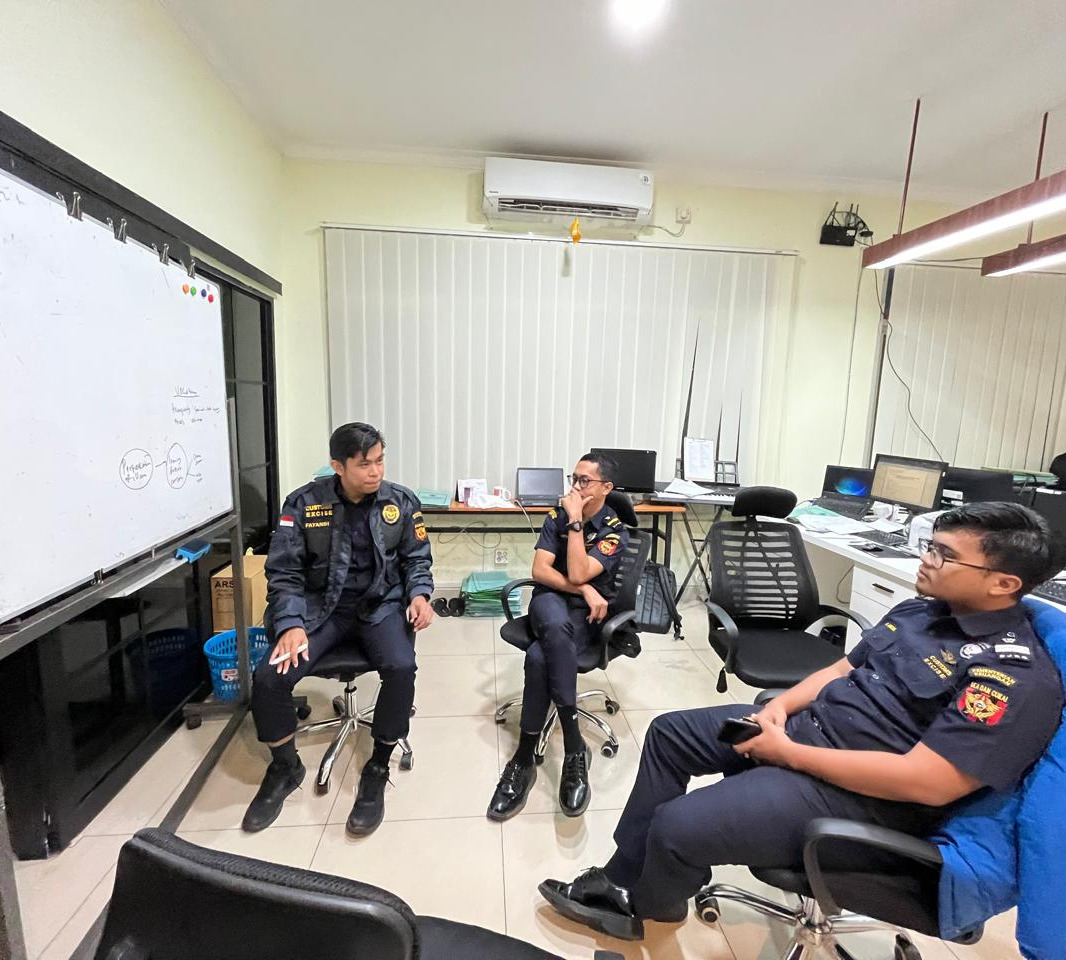
On August 29th, from 08:20 to 08:45 WIB, we read and discussed Hadith number 11 from Arba'in Nawawi. The discussion involved five participants: Agus, Fayandi, Febri, Debi, and Cha-Cha, with Agus serving as the reader.
We talked about the Hadith, which advises leaving what is doubtful in favor of what is certain.
Fayandi shared his experience at a hotel in Bangkok, Thailand, where he avoided eating chicken because he was unsure if it had been slaughtered in the name of God, and instead chose fish as an alternative. Agus recounted his time in Samapta training, where a trainer emphasized, “If you have doubt, just leave it from now on.” Cha-Cha shared her decision to stop using nail polish (kutek) because she was unsure whether it would allow her to perform Wudu properly. Debi and Febri provided other examples of doubtful matters, such as hair coloring and eyebrow embroidery.
We also reflected on the brevity of human life, which the Prophet Muhammad (PBUH) described as typically between 60 and 70 years. We calculated that if one lives to be 60 years old, about 20 years are spent sleeping, 20 years working, and the remaining 20 years on other activities. We discussed how, if our intention behind all activities is for the sake of Allah, they can be considered acts of worship (Ibadah).
We delved into the meaning of Ibadah, concluding that it encompasses all actions done with the intention of pleasing Allah, not just physical or spiritual activities like prayer or recitation of the Quran. For example, sports can be an act of Ibadah if done with the intention of maintaining health for the sake of Allah.
Additionally, we touched on the history of Prophet Noah (AS). After the Great Flood, three groups of people emerged, who are identified today in anthropology as Caucasoid (Western and Middle Eastern people with white skin), Negroid (Africans, Papuans, etc., with black skin), and Mongoloid (Asians with yellow skin). We noted that the lifespan of Prophet Noah's people was around 1000 years, much longer than the lifespans we have today.
Lastly, we discussed Prophet Adam (AS), recognizing him as the father of all human beings.
Vocabulary
- Prophet = Nabi
- delved = menyelidiki
- acts of worship = Ibadah
- nail polish = kutek
- eyebrow embroidery = sulam alis
Grammar
at
- Fayandi shared his experience at a hotel in Bangkok, Thailand...
- ...had been slaughtered in the name of God...
on
- On August 29th, from 08:20 to 08:45 WIB...
- ...and the remaining 20 years on other activities.
in
- ...experience in Bangkok, Thailand...
- ...had been slaughtered in the name of God...
- Agus recounted his time in Samapta training...
Write comment (0 Comments)